Straker captures Mark Petrie
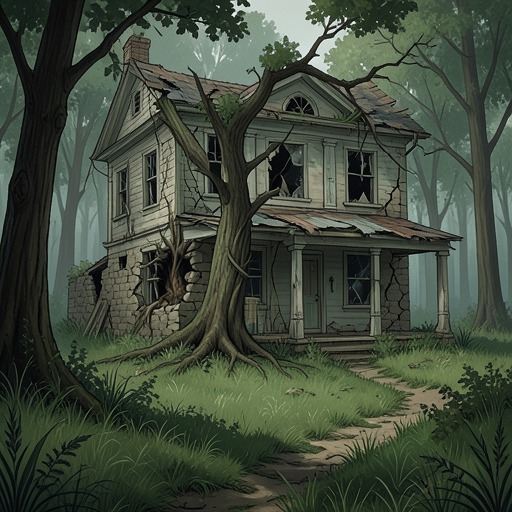
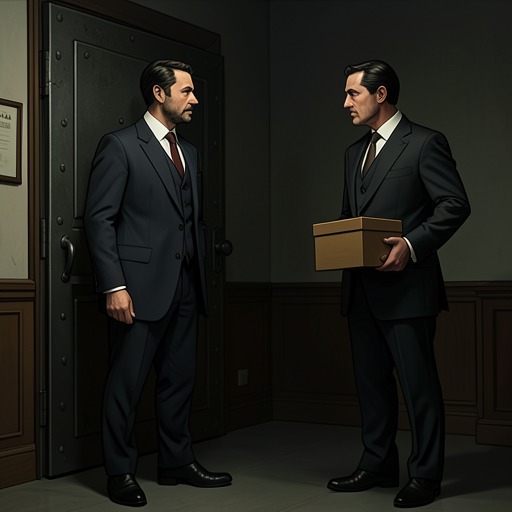
'Salem's Lot: A NovelStraker captures Mark Petrie at the moment when investigation becomes physical danger. Inside the Marsten House, Mark and Susan Norton reach the open cellar door, but before they can descend or understand what awaits below, Straker attacks Mark, knocks him unconscious, and carries him toward the upper floor. The episode establishes Mark not as a passive child victim but as a perceptive, strategically minded opponent whose knowledge makes him valuable to the enemy and indispensable to the resistance.
The Approach to the Cellar
The capture takes place in a confined domestic space whose ordinary surfaces conceal a supernatural threat. The cellar door stands ajar, opening onto darkness that seems to extend hungrily into the kitchen. Mark recognizes that this is the place they must enter, while Susan responds weakly and remains immobilized by fear. The staging places the children at the threshold of hidden danger: Mark moves first, pulls the door open, and looks downward, but the decisive threat comes from behind rather than below.
That reversal gives the scene its immediate dramatic force. The cellar appears to be the obvious danger, yet Straker is already occupying the space behind them. When Mark begins to speak and Susan hears something, she turns too late and sees Straker grinning. The open door therefore functions both as a literal route into the house’s secret and as a distraction that allows the captor to control the scene.
The Attack and Abduction
Mark turns and tries to dive around Straker, but Straker’s fist crashes into his chin, and Mark loses consciousness. The violence is sudden and efficient: there is no extended struggle, only the collapse of the child’s attempted escape and the immediate transfer of control to Straker. The attack changes the value at stake from discovery to bodily survival and freedom; Mark enters the scene as an investigator and leaves it as a prisoner.
When Mark regains partial awareness, he is being carried up a flight of stairs. He carefully allows his eyelids to open only a fraction and keeps his head loose, pretending to remain unconscious. This is his first counteraction after the blow. Even while being transported, he observes the architecture, distinguishes the upper staircase from the cellar stairs, notices that the sun has not yet gone down, and recognizes that daylight may still offer hope. His apparent helplessness is therefore tactical rather than complete.
Straker understands the deception. He asks whether Mark thinks he does not know when someone is playing possum, then appears enormous from Mark’s position on the floor, with a coil of rope around his shoulder. The rope makes the purpose of the abduction unmistakable: Mark is not merely being removed from the scene but prepared for restraint and further use. Straker’s controlled awareness also confirms that the enemy is not relying only on supernatural power; he is an observant human agent capable of reading and defeating Mark’s improvisation.
Mark as a Threat to the Enemy
The capture gains significance from Mark’s earlier conduct and knowledge. At school, Richie Boddin identifies him as the new child who knows all the answers in mathematics, and Richie’s bullying frames Mark as conspicuous precisely because intelligence makes him difficult to dominate. Mark’s quick judgment at the window later shows that this intelligence is not limited to schoolwork. When Danny Glick appears outside his bedroom, pale and feral, with bloodlike darkness around his mouth and teeth grown long and sharp, Mark understands within seconds that he faces a peril greater than ordinary death.
Mark’s knowledge also shapes his reading of Straker. Before the capture, he has already watched Straker in town and judged his eyes to resemble those of a toad sunning itself on a rock. He suspects that Straker can recruit people by paying them or by other means, and he carries his father’s target pistol while knowing that ordinary bullets are ineffective against the vampires. His reasoning is imperfect but active: he distinguishes the supernatural enemy from its human servant, identifies the limits of firearms, and still considers a shot between the eyes a possible way to stop Straker.
The child’s room supplies another part of this preparation. Mark works on a model of Frankenstein’s monster and arranges monsters from popular horror imagery in a tableau: Dracula menaces a girl, the Mad Doctor tortures a woman, and Mr Hyde stalks an old man. He understands death through the logic of monsters before the supernatural crisis becomes personal. The scene at the Marsten House converts that imaginative rehearsal into lived danger, while the later capture tests whether the knowledge acquired through stories can become practical resistance.
Consequences for the Resistance
Mark’s abduction does not erase his usefulness; it concentrates it. After the attack, he survives long enough to retain observations about the house, Straker, and the circumstances of his captivity. When Matthew Burke asks the group about the most important task, Mark answers that Barlow must be killed. Burke corrects the order of operations: first they must find Barlow, and Mark is urged to recall anything he saw, heard, smelled, or touched that could reveal the hiding place.
This exchange makes the capture part of the resistance’s intelligence structure. Mark is both endangered witness and knowledge producer. His experience inside the Marsten House gives him evidence that the adults need, while his imprisonment demonstrates the cost of possessing that evidence. The enemy tries to silence or exploit him, but the fact that he can later contribute to locating Barlow means the abduction ultimately produces information rather than surrender.
The event also clarifies the division of labor in the conflict. Straker supplies force, intimidation, and physical custody; Mark supplies observation, memory, and the willingness to act despite fear; Matthew Burke turns Mark’s impressions into a strategic search for Barlow. The capture thus links a child’s private ordeal to the collective campaign against the vampire master.
Narrative Significance
Straker captures Mark at a threshold between spaces, between childhood imagination and supernatural knowledge, and between private curiosity and open warfare. The cellar door promises hidden revelation, but the attack interrupts discovery with captivity. Mark’s response preserves a narrow margin of agency: he cannot prevent the blow, yet he can feign unconsciousness, map his surroundings, notice the remaining daylight, and carry those observations into the resistance.
The episode’s horror depends less on spectacle than on asymmetry. Mark is small enough to be carried and young enough to be treated as vulnerable, while Straker appears overwhelming from the floor and arrives with a rope already prepared. Yet the scene refuses to define Mark solely by helplessness. His earlier judgments about Danny Glick and Straker, his understanding of vampire weaknesses, and his later insistence that Barlow must be killed show that capture is a temporary reversal of power rather than the final meaning of the encounter. The child taken from the house becomes one of the people whose knowledge makes the enemy discoverable and therefore destroyable.